

Main
10/2026 – 04/2027
Specialisation · Active learning
Main
Since Sep 2026 · lifetime access
Master’s in Artificial Intelligence
BIG schoolAlso in progress
- How can we stay competitive through judgement? The future of work in the age of AIInsights + Analytics España2026
- Sintéticos en Investigación Cualitativa de Mercados (synthetic data in qualitative market research)Insights + Analytics España2026
Completed
- Práctico de Inmersión en la IA para Investigadores de Mercados (hands-on AI immersion for market researchers)Insights + Analytics España2026
- ChatGPT Work: from zero to agents (8 h)BIG school2026
- España Emprende · Lean Startup and agile methodologiesPhimister Business School2026
- ChatGPT: How to Apply Artificial Intelligence in Your BusinessPenta Learning E-ducation2024
- Leadership · Public speaking · Conflict resolutionFundación Paco Puerto · Granollers2023
My framework
My foundation in action
- International B2B and B2B2C marketing and communication
- Connecting marketing, sales and product around the customer
- Adapting messages to different markets, languages and cultures
- Organising and facilitating workshops with sales, product and R&D to define messages and value propositions
- Caring for the experience at events and launches
- Managing budgets and suppliers
- Sending newsletters to leads with HubSpot
- Using generative AI every day (ChatGPT, Claude, NotebookLM) to create content and to organise and synthesise information, and agentic AI (Claude Cowork, ChatGPT Work) to automate tasks, which I keep exploring in more depth
Skills I’m integrating
- Customer Experience: customer journeys, touchpoints and friction
- Qualitative research: interviews and in-depth techniques
- Distinguishing between evidence, inference, hypothesis and insight
- Choosing the right research method
- AI applied to research and decision-making: what it can support, where its limits lie and how to validate it
On the horizon
- The relationship between people and technology: how we perceive social robots and AI-powered services, and how much trust they inspire
- Synthetic data in research: possibilities and risks
- AI agents applied to marketing and research processes
What brought me here?
The sustainability challenge
Helping customers understand the differences between recyclable, compostable and bio-based materials, so they could make informed decisions. As a manufacturer, INTERMAS Group had a responsibility for environmental education along the whole value chain.
The brand challenge
On top of that came another challenge: in industry we tend to look at the product first —what we offer and how it performs. That makes sense in a technical sector, but it is also one of marketing’s great challenges: making visible the value of a coherent brand, where every catalogue, every trade fair and every message tells the same story. Because in B2B, people make the decisions too.
Working with the sales teams and adapting messages to very different markets, I came to see that the same product isn’t chosen in the same way everywhere.
With the rebrand I proposed turning that perspective around: talking less about what we made and more about what it brought to people and the environment. I led the workshops to define it.
Being the only marketing coordinator for the entire group, even with the support of external agencies, taught me to prioritise what truly makes an impact. It also taught me to temper my perfectionist streak: today I know that done is better than perfect, without ever neglecting the details that matter.
Today I want to take that way of looking further: start with the person, understand what they need and what moves them forward or holds them back, and turn that understanding into better experiences and decisions.
What my experience brings to Customer ExperienceWhat my experience brings to CX
- Organising international events from start to finish
- Caring for every touchpoint of an experience
- Adapting messages to markets and languages
- Understanding that every context makes decisions differently
- Moving from the product to its benefits
- Designing from value for each customer segment
- Rebranding and brand coherence
- Making the brand promise the same thing on every channel
- Connecting product, sales and marketing
- Aligning teams around the customer
- Workshops with sales, product and R&D
- Facilitating co-creation between teams
How I approach a challenge: strategic perspective first
What if the problem wasn’t deciding, but the perspective we decide from?
- Start from the business objective: what the company needs to decide.
- Break it down and prioritise: choose which objective to tackle first, based on its impact and the resources available.
- Observe and ask the right questions before forming an opinion.
- Choose words with care: the ones I hear and the ones I use.
- Question what we take for granted.
- Turn understanding into concrete actions and business decisions.
No result is ever guaranteed. But a good method, one that starts from knowing people (the buyer personas), makes it possible to form hypotheses and to set, from the outset, the objectives and metrics for each action, including the figures that will tell us when to scale up and when to iterate. That way we can test on a small scale and move forward without taking on too much risk.
Methods I’m incorporating
From my training in Lean Startup and agile methodologies I bring a way of working: testing ideas on a small scale before investing, with a minimum viable product (MVP), listening to what customers say and iterating in short cycles. It fits my way of approaching challenges: start with the person and validate before scaling.
A real example
Redefining the brand of such a complex group required knowing it from the inside, something difficult for an external agency. So I led the project and brought together sales, product and R&D from each business unit to ask ourselves what our solutions truly offered people and the environment. The brand’s new narrative came out of those conversations.
What I share
On LinkedIn I connect current news with insights on behaviour, research, customer experience and the relationship between people and technology.
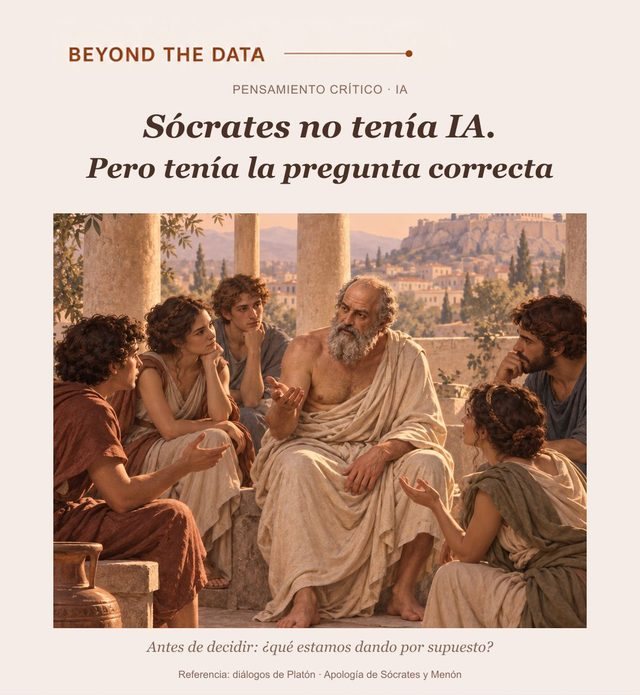 Socrates didn’t have AI. But he had the right question.
Thinking critically means examining what we are accepting, including when faced with an AI answer.
Read on LinkedIn ↗
Socrates didn’t have AI. But he had the right question.
Thinking critically means examining what we are accepting, including when faced with an AI answer.
Read on LinkedIn ↗
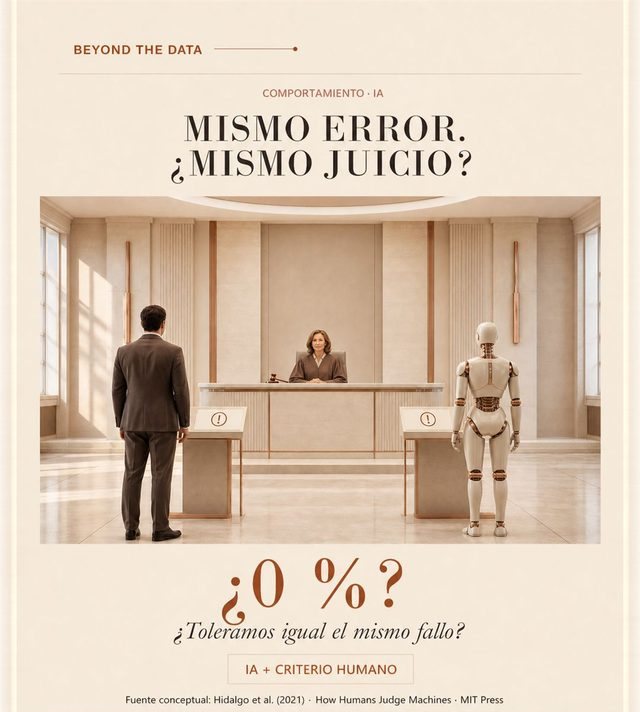 Same mistake. Same judgement?
Do we forgive a human error the same way we forgive an AI’s? A key question for those of us who design experiences.
Read on LinkedIn ↗
Same mistake. Same judgement?
Do we forgive a human error the same way we forgive an AI’s? A key question for those of us who design experiences.
Read on LinkedIn ↗
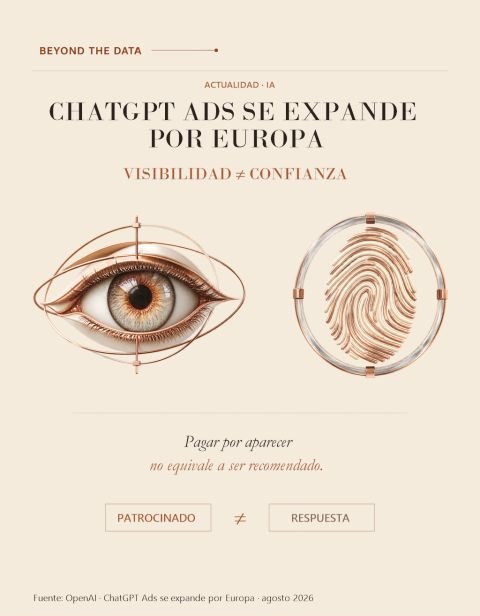 Can you buy visibility without buying trust?
Visibility can be bought. Trust cannot.
Read on LinkedIn ↗
Can you buy visibility without buying trust?
Visibility can be bought. Trust cannot.
Read on LinkedIn ↗
 All my posts, experiments and words with a story.
Enter EM Lab →
All my posts, experiments and words with a story.
Enter EM Lab →